Image
gray dots and lines forming a wavy pattern

Perspectives

Sticky Notes on a Board

Design Sprints That Move the Business, Not Just the Backlog

Agile is about responsiveness. Sprints are how that plays out in practice. They compress weeks of conversation into a few structured days. But speed alone doesn’t guarantee progress. A sprint can produce thoughtful prototypes and polished features and still fail to move the organization forward, if it isn’t grounded in a clear objective.

AI with a Hand

AI Is Theater Without Human Orchestration

Artificial intelligence has become the most overperformed act in modern business. Executives announce bold initiatives. Marketing teams publish thought leadership. Product teams demo impressive prototypes. Slide decks glow with neural networks and arrows pointing toward “transformation.”

Yet beneath the performance, something is often missing: human direction.  

AI in a Blue Chip

How AI Is Changing Search and What That Means for SEO

More and more people are skipping search engines entirely.  They’re not typing queries into Google, scanning results, or clicking links. Instead, they’re asking questions directly to AI or large language models (LLMs) like OpenAI’s ChatGPT or Google’s Gemini, and accepting the answer they’re given.

So the natural question becomes:  If users aren’t searching anymore, does SEO still matter?

Yes, but not in the way it used to.

Connected lines

Designing for Reality: What It Takes to Deliver Through Compliance

Digital projects rarely start with a blank slate. More often, they begin inside environments shaped by compliance requirements, security reviews, procurement rules, and onboarding processes that weren’t designed with speed or flexibility in mind.

At Marker Seven, this is familiar territory.

Futuristic Tunnel

Looking Ahead to 2026: What’s next for Marker Seven

As we look toward 2026, the role of digital agencies continues to change. We see clients navigating more complex ecosystems, tighter budgets, and rapidly evolving technology. They’re no longer looking for vendors who simply execute tasks. They’re looking for partners who can help them make sense of change, prioritize wisely, and build digital experiences that last.

At Marker Seven, we see 2026 as a year to double down on what matters most: thoughtful strategy, strong product thinking, and long-term partnerships that deliver real value.

Phone app showing Voice Input

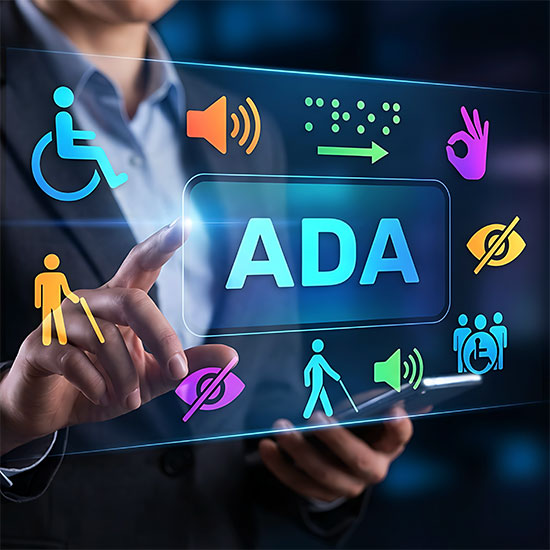
The Future of Accessibility: Designing Beyond Compliance

For years, digital accessibility has been framed as a compliance issue, something organizations must do to meet WCAG (Web Content Accessibility Guidelines) standards or avoid legal risk. But accessibility is much more than that. It’s about creating digital experiences that work for everyone, regardless of ability, device, or circumstance.

Role-Based Navigation

How to Design Role-Based Navigation for Complex Audiences

Modern websites often serve multiple audiences, each with very different needs. Employees, customers, partners, donors, or members may all visit the same site, but what they are looking for — and how they expect to find it — can vary widely. Without a clear approach, a site can become cluttered and confusing, forcing users to dig for information that should be readily available.

AI Web Experiences

AI and Web Experiences: How Assistants and Agents Will Change UX

Artificial Intelligence is no longer a futuristic add-on. It’s becoming part of how users expect to interact with digital platforms. From personalized recommendations to voice-powered navigation, AI is changing the way people move through websites and applications. The next wave is AI assistants and agents — intelligent helpers that can transform user experience (UX) by guiding, anticipating, and even acting on behalf of the user.

How Product Roadmaps Transform Digital Experiences - Marker Seven

How Product Roadmaps Transform Digital Experiences

At Marker Seven, we understand launching a digital product is rarely the end of the journey. Today’s digital experiences need to evolve constantly to meet user expectations, respond to business needs, and keep pace with technology. Without a clear path forward, teams risk building in circles, overspending, or delivering features that don’t actually move the needle.